


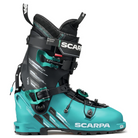
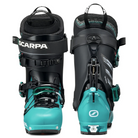

Scarpa Gea Women's Alpine Touring Boot
Couldn't load pickup availability
Description
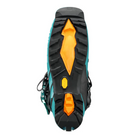
The Scarpa Gea is a 100-flex women's all-mountain touring boot on a 102mm last, 1,220 g per boot with 61 cuff rotation and a Vibram Cayman LT (ISO 9523) sole. The women's Maestrale, a do-it-all boot.
Tech Specs
Scarpa Gea Alpine Touring Boot
The goldilocks of women’s touring boots, the Scarpa Gea offers the best of all worlds: touring comfort, efficient climbing, and the ability to drive a real ski. At 1,220 grams (size 25) with a 102mm last and 100 flex, the Gea hits the sweet spots for weight, fit and performance. The Gea pairs a Pebax Rnew shell with a carbon-core backbone for controlled skiing in any conditions and 61 degrees of cuff rotation allow a natural stride on long approaches and climbs.
Is This the Right Boot for You?
CCBB Boot Ratings
CCBB Fit Profile
Why We Like It
- The Gea strikes an excellent up-versus-down balance, skiing a progressive 100 flex while touring with 61 degrees of cuff rotation.
- At 1,220 g per boot (size 25) it is light enough for big-vertical days yet supportive enough to drive a real ski on the descent.
- The Pebax Rnew shell with a carbon-core backbone gives progressive support without the harshness of a full carbon boot.
- The Vibram Cayman LT sole (ISO 9523) with tech inserts grips rocky approaches and pairs with pin-tech touring bindings.
Best Uses
- All-around touring and everyday backcountry days
- Ski mountaineering and long ascents that reward a light, efficient uphill
- Skiers who want one boot that balances the up and the down
Bootfitter's Advice
The Gea fits as a medium-volume women's boot on a 102 mm last, with a secure heel from the Heel Retention Strap and enough forefoot room to suit a broad range of feet. After fitting the Gea line for years, we find it works well for most foot types, and the current redesign runs lower over the instep and slightly roomier in the toe box than older Gea boots. We suggest you confirm size with a shell fit rather than converting from a street-shoe number.
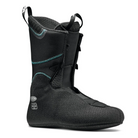
We can punch the Pebax Rnew forefoot and sixth-toe area readily, and the shell modifies well, though we avoid the carbon-core backbone zone. Plan on a heat mold of the Intuition Pro Flex Touring liner to lock in heel hold and relieve the instep. Entry is easiest with the tongue pulled toward the arch-side of the foot.
Technical Specifications Manufacturer specs · Click to expand
Fit and Construction
Features and Compatibility
Compare the Scarpa Gea
Gea vs. Scarpa Gea RS
The Scarpa Gea RS is the stiffer, more downhill-focused sibling at a 125 flex, using a carbon-infused Grilamid Bio shell rather than the Gea's Pebax Rnew. On the same 102 mm last, women who charge the descent choose the Gea RS, while those who value a lighter, more forgiving all-around boot choose the Gea.
Shop Scarpa Gea RS bootsGea vs. Scarpa Maestrale
The Scarpa Gea is the women's version of the Maestrale, sharing the shell mold, Speed MLT walk mechanism, and Vibram Cayman LT ISO 9523 sole. The Gea adds a scalloped liner cuff to accommodate the calf and comes in a softer 100 flex versus the Maestrale's 115. Calf shape, fit, and desired flex usually decide between them.
Shop Scarpa Maestrale bootsGea vs. Tecnica Zero G Tour Pro W
Skiers cross-shop these two as women's touring boots. The Tecnica Zero G Tour Pro W is a stiffer four-buckle boot on a narrower 99 mm last, while the Scarpa Gea runs a wider 102 mm last, a three-buckle Wave Closure, and a more forgiving 100 flex at a lighter weight. Skiers who want more downhill power lean Zero G Tour Pro W, while those who value balance and a wider fit lean Gea.
Shop Tecnica Zero G Tour Pro W bootsCommon Questions
Who should buy the Scarpa Gea?
Is the Scarpa Gea stiff enough to ski hard?
What bindings work with the Scarpa Gea?
How is the Gea different from the Scarpa Gea RS?
What foot shape fits the Scarpa Gea best?
How does the sizing run on the Scarpa Gea?
Can the Scarpa Gea be punched and molded?
How well does the Scarpa Gea tour?
Our Verdict
Frequently Asked Questions
What foot shape works best?
Low- to medium-volume feet with a lower instep and secure heel.
Does it punch well?
Minor boot fitting is possible, but race boots are less forgiving to modify than heavier Grilamid touring boots.